

As a small business owner, you wear countless hats. You’re the CEO, the head of marketing, the lead salesperson, and often, the receptionist. Every ringing phone is a potential opportunity, but it’s also an interruption. Every missed call feels like a lost lead. You’re caught in a frustrating cycle: you need to answer calls to grow, but answering calls stops you from doing the work that grows the business. Meanwhile, the cost of hiring a full-time receptionist feels impossibly high, and the manual process of booking appointments and answering the same questions over and over is a constant drain on your most valuable resource: time.
What if you could solve this problem permanently? What if you could capture every lead, professionalize your customer interactions, and free up your team, all for less than the cost of a daily coffee?
This is not just a simple list of services. This is your definitive playbook. We will guide you through quantifying the true cost of your current system, understanding the power of an AI virtual receptionist, conducting a definitive cost-benefit analysis, and finally, choosing and implementing the perfect solution for your unique business. Let’s turn your phone from a source of stress into your most powerful engine for growth.
The Hidden Drain: Why Missed Calls & Manual Tasks Are Costing Your Business
The occasional missed call might seem like a minor issue, but the cumulative effect is a significant drain on your revenue and reputation. The modern customer expects instant service, and when their call goes to an unanswered ring or a generic voicemail, they don’t wait. In fact, research shows that a staggering 85% of customers whose calls go unanswered will not call back1. They simply move on to your competitor.
The financial stakes are alarmingly high. One analysis found that the average business loses $126,360 annually due to unanswered calls3. For a small business, where every lead is critical, this isn’t just a statistic; it’s a direct threat to your bottom line.
Beyond the lost leads, consider the operational inefficiency. Your time is precious, yet how much of it is spent on tasks that don’t generate revenue? An AI solutions provider, Dialzara, highlights a frustrating reality: for many small businesses, a staggering 90% of incoming calls are spam2. This means your team could be wasting hours each week filtering out robocalls and sales pitches, increasing the risk of accidentally missing a legitimate customer in the process. This is before we even factor in the time spent on inefficient manual booking, answering repetitive questions, and manually entering customer data. Each of these tasks is a small leak that, combined, can sink the ship.

What is an AI Virtual Receptionist? The Modern Solution Explained
An AI virtual receptionist is a sophisticated software solution designed to act as your business’s first point of contact over the phone. Think of it not as a simple robocall system, but as a highly trainable, always-available team member. It uses advanced conversational AI to understand what a caller needs and provide an intelligent, human-like response.
At its core, this automated phone answering technology is designed to handle the vast majority of routine inbound calls, 24/7, without human intervention. Here’s how a typical call flow is transformed:
Traditional Call Flow:
- Phone Rings -> You or staff answer (interruption) OR Call is missed (lost lead) -> Manually take message/book appointment -> Manually enter data into CRM.
AI Receptionist Call Flow:
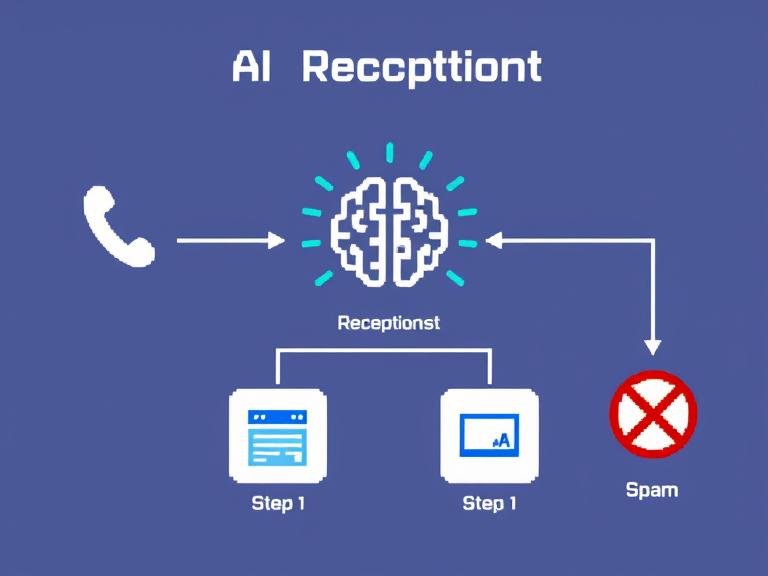
- Phone Rings -> AI answers instantly with a custom greeting -> AI understands caller’s intent (e.g., “I’d like to book an appointment”) -> AI books appointment directly in your calendar / Answers FAQ / Takes a detailed message -> AI automatically logs call summary and customer info in your CRM.
This isn’t just theory. The impact is immediate and measurable. For example, one case study showed that an e-commerce business was able to reduce the founder’s call-related interruptions by a remarkable 78% after implementing an AI receptionist. This 24/7 smart assistant works tirelessly in the background, ensuring you never miss an opportunity while freeing you to focus on strategic growth.
The Definitive Cost Comparison: AI vs. Human Receptionist
For many small businesses, the decision often comes down to budget. The idea of hiring a human receptionist seems like the “gold standard,” but the true cost is often misunderstood and dramatically underestimated. Let’s break down the real numbers in an AI vs human receptionist showdown.
Calculating the True Cost of a Human Receptionist
The cost of hiring an employee goes far beyond their hourly wage. When you calculate the total financial commitment, the picture becomes much clearer.
First, consider the salary. According to the U.S. Bureau of Labor Statistics, the median hourly wage for receptionists was $17.90 in May 20244. For a full-time employee (40 hours/week), that’s approximately $37,232 per year in base salary alone.
Now, let’s add the “hidden costs”:
- Payroll Taxes: Employer contributions for Social Security and Medicare (FICA) add roughly 7.65%.
- Benefits: Health insurance, paid time off (PTO), and retirement contributions can easily add another 20-30% of the salary.
- Recruitment & Training: The costs to post a job, interview candidates, and train the new hire.
- Equipment & Supplies: A desk, computer, phone system, and software licenses can cost between $1,000 – $2,000 per employee.
When you add it all up, the true annual cost of a single full-time receptionist can easily exceed $50,000.
Understanding AI Receptionist Pricing Models
AI virtual receptionists operate on a completely different model: a predictable, low-cost monthly subscription. Instead of paying for a person’s time (including their breaks, sick days, and vacation), you pay for the service’s utility.
Pricing is typically tiered based on factors like call volume or the number of features you need. Based on industry data, the costs are remarkably affordable:
- AI Receptionist Monthly Cost: Typically ranges from $30 to $150.
- Human Receptionist Monthly Cost: As calculated above, this can be $2,500 to $3,100+ (when factoring in hidden costs).
This model allows your business to access enterprise-level technology for a fraction of the cost of a single part-time employee, with the ability to scale up or down as your call volume changes.
The Verdict: A Side-by-Side Financial Showdown
When placed side-by-side, the financial argument is overwhelming. An AI receptionist isn’t just slightly cheaper; it represents a fundamental shift in cost structure and value.
| Feature / Cost | Full-Time Human Receptionist | AI Virtual Receptionist |
|---|---|---|
| Availability | 8 hours/day, 5 days/week | 24 hours/day, 7 days/week |
| Median Annual Salary | ~$37,2324 | N/A |
| Taxes & Benefits (Est.) | ~$10,000+ | $0 |
| Equipment & Overhead | ~$1,500 | $0 |
| Total Estimated Annual Cost | $50,000+ | $360 – $1,800 |
| Potential Annual Savings | ~$48,000+ |
The break-even analysis is staggering. In many cases, an AI receptionist pays for itself if it successfully handles just one or two qualified customer calls per month that would have otherwise been missed. It transforms a major cost center into a high-ROI investment.
Your Implementation Playbook: Choosing & Setting Up Your AI Receptionist
Making the switch is more than just a cost-saving measure; it’s a strategic upgrade to your business operations. But to get the most value, you need to choose the right service and set it up correctly. This playbook will guide you through the critical steps.
5 Essential Features Every Small Business Needs
When evaluating different AI phone answering services, don’t get lost in technical jargon. Focus on these five critical features that deliver real-world value:
- Customizable Greetings & Voices: Your brand has a unique voice. Your AI should too. Look for services that allow you to record your own greetings or choose from a variety of high-quality, natural-sounding AI voices.
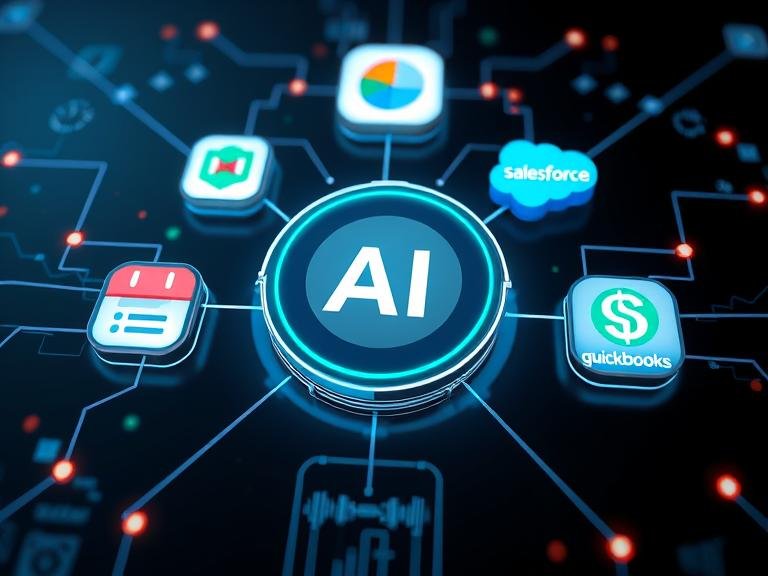
- CRM & Calendar Integration: This is non-negotiable. The AI must be able to automatically book appointments in your calendar (like Google Calendar or Outlook) and push call summaries and new lead information directly into your CRM. This eliminates manual data entry and creates a seamless workflow.
- Intelligent Call Routing & Human Handoff: The AI should be smart enough to know when it’s out of its depth. It must have the ability to seamlessly transfer complex or urgent calls to a specific person or department based on rules you define.
- Detailed Call Summaries & Analytics: You need to know what’s happening on your phone lines. A good service provides real-time transcripts, call summaries, and analytics dashboards that show call volume, peak times, and common customer questions.
- Automated Lead Qualification & Booking: The most powerful AI receptionists can do more than just answer calls. They can ask qualifying questions (e.g., “Are you looking for a quote for a new installation or a repair?”) to identify hot leads and even complete the booking process on the spot.
-
Stop losing money to inefficiencies and start investing in growth.
How to Integrate Your AI Receptionist with Your CRM & Calendar (A Step-by-Step Guide)
Integrating your AI receptionist with your existing tools is the key to unlocking maximum efficiency. While the exact steps vary by provider, the general process is straightforward and addresses a major content gap often missed by other guides.
- Authorize Access: In your AI receptionist’s dashboard, you’ll find an “Integrations” section. Here, you’ll select your CRM (e.g., HubSpot, Salesforce) and calendar (e.g., Google Calendar) and grant the service permission to access them.
- Map Key Fields: You’ll tell the AI where to put the information it gathers. For example, you’ll map the “Caller’s Name” field from the AI to the “Contact Name” field in your CRM, and the “Caller’s Phone Number” to the “Phone” field.
- Set Up Triggers and Rules: This is where the magic happens. You’ll create rules like, “IF a caller requests an appointment, THEN create an event in my Google Calendar and invite the caller.” Or, “IF a caller answers ‘yes’ to the ‘Are you a new customer?’ question, THEN create a new deal in my CRM and assign it to the sales team.”
It’s also important to understand the difference between native integrations and those requiring a third-party tool like Zapier. Native integrations are built-in and generally more seamless, while Zapier acts as a bridge to connect apps that don’t have a direct connection. Most top-tier AI receptionist services offer native integrations for popular platforms.
A Balanced View: When a Human Receptionist Still Makes Sense
To build trust, it’s crucial to provide a balanced perspective. While an AI receptionist is the superior choice for most small businesses, there are specific scenarios where the nuance and empathy of a human are irreplaceable.
A human receptionist may still be the better option if your business model is built on high-touch, long-term relationships where every client interaction is deeply personal and complex (e.g., a high-end wealth management firm or a boutique therapy practice). For handling emotionally charged conversations or complex, multi-layered problems that require true creative problem-solving, the human touch remains the gold standard. For many businesses, the ideal solution is a hybrid model: let the AI handle 90% of the routine calls, freeing up your human staff to focus on these high-value, complex interactions.
The Best AI Virtual Receptionist Services for Small Businesses (An Unbiased Review)
Choosing a provider can be daunting. To help you navigate the market, we’ve broken down our recommendations based on common business needs. Our methodology is simple: we prioritize services with a strong balance of essential features, transparent pricing, and proven reliability for the small business use case.
Best Overall for Most Small Businesses
For the majority of small businesses looking for a powerful, all-in-one solution, a service like Nextiva often stands out. Its strength lies in its robust feature set that balances AI efficiency with sophisticated business phone system capabilities. Features like a multi-level auto attendant and custom call routing rules allow you to create a professional and highly efficient call flow that can grow with your business. It provides a perfect middle ground of power and usability.
Best for Restaurants & Appointment-Based Businesses
Service businesses like salons, clinics, home service providers, and restaurants live and die by their appointment book. For this category, the best choice is a service that specializes in automated booking. Look for platforms that can handle complex scheduling requests, ask industry-specific questions (e.g., “How many people in your party?” or “Is this for a haircut or a color treatment?”), and reduce no-shows with automated reminders.
Best for Solo Entrepreneurs & Freelancers
If you’re a solopreneur, your primary needs are professionalism and time-saving at the lowest possible cost. The best solution is often a simple, easy-to-set-up AI receptionist that excels at the basics: professional greetings, reliable message-taking, and routing critical calls to your cell phone. The focus here isn’t on complex integrations but on creating a polished front-door for your business that ensures you never miss a lead, even when you’re on a job or in a meeting.
Why AICallAssistant.eu Could Be the Right Choice for Your Business

As we’ve explored throughout this playbook, the right AI virtual receptionist is a strategic asset. While evaluating your options, we encourage you to consider AICallAssistant.eu. We built our platform from the ground up to solve the exact pain points we’ve discussed.
We believe in transparency and results. Our seamless CRM and calendar integration directly solves the inefficient manual booking and data entry problem. Our system is designed to intelligently filter out the spam that wastes your time, and our 24/7 smart assistant ensures you capture every lead, day or night. We’ve focused on creating a solution that not only matches the essential features checklist but also delivers a clear and immediate return on investment, transforming your phone system from a cost center into a growth driver.
Conclusion: Stop Managing Calls, Start Building Your Business
The status quo of handling business calls is broken. It’s inefficient, expensive, and actively costing you customers. Relying on interruptions, voicemails, and the prohibitive cost of a human receptionist is no longer a viable strategy for a growing small business.
As this playbook has shown, an AI virtual receptionist is not just a futuristic tech gadget; it is a practical, powerful, and profoundly cost-effective strategic decision. It allows you to provide elite, 24/7 customer service, eliminate operational drag, and save tens of thousands of dollars a year. By implementing this modern solution, you can finally stop managing calls and start focusing all your energy on what you do best: building your business.
Ready to stop missing calls and start growing your business? Schedule a free demo of AICallAssistant.eu today and see how our AI receptionist can transform your workflow in minutes.
This article may contain links to our partners. All pricing information is accurate as of the last update but is subject to change. We recommend visiting the provider’s website for the most current details.
Sources & References
- Harrison, J. (n.d.). Impact of Missed Calls on Customer Satisfaction and Revenue. SwingPoint Media. Retrieved from https://swingpointmedia.com/impact-of-missed-calls-on-customer-satisfaction/
- Dialzara. (n.d.). Missed Calls: Hidden Costs and AI Solutions. Retrieved from https://dialzara.com/blog/missed-calls-hidden-costs-and-ai-solutions
- emitrr. (n.d.). The True Cost Of A Missed Call To Your Business. Retrieved from https://emitrr.com/blog/missed-call/
- U.S. Bureau of Labor Statistics. (2024, May). Receptionists: Occupational Outlook Handbook. Retrieved from https://www.bls.gov/ooh/office-and-administrative-support/receptionists.htm
Leave a Reply