

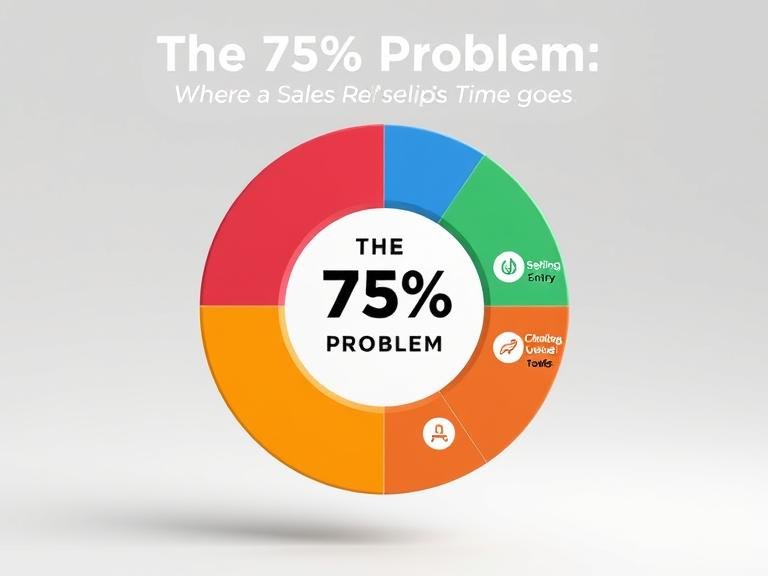
Is your sales team spending more time on data entry and dead-end calls than on actually selling? You’re not alone. According to a landmark study by the global consulting firm Bain & Company, sellers may spend only about 25% of their time in direct contact with customers1. The other 75% is consumed by administrative tasks, chasing unqualified leads, and internal meetings—a staggering drain on productivity and morale. This inefficiency isn’t just frustrating; it’s a direct hit to your bottom line.
Every sales manager and business owner feels the pain of unqualified sales leads and the high cost of a team bogged down by manual processes. Opportunities are missed, top talent gets burned out, and revenue goals feel perpetually out of reach. But what if you could clone your best sales development rep, have them work 24/7 without ever getting tired, and ensure every single inbound lead is qualified with perfect consistency?
That’s the power of an AI call assistant. This isn’t just another piece of software; it’s a fundamental shift in how sales teams operate. This article is your definitive playbook. We’ll move beyond the hype to give you a strategic, step-by-step framework for diagnosing your team’s inefficiencies, implementing an AI-powered lead qualification engine, and proving its return on investment. It’s time to stop drowning and start selling.
The Diagnosis: Why Your Sales Team is Drowning in Inefficiency
Before implementing a solution, you must first understand the depth of the problem. The feeling of inefficiency is common, but the underlying causes are often hidden in plain sight within your daily operations. The costs are measured not just in wasted hours, but in lost deals, diminished morale, and a widening gap between your team’s potential and its actual performance.
The 25% Problem: How Much Time is Actually Spent Selling?
Let’s revisit that powerful statistic: only a quarter of a salesperson’s time is spent on their core function—selling. The rest of their week is a whirlwind of non-revenue-generating activities. As Bain & Company highlights, “AI could double that [selling time] by taking on much of the work that surrounds selling but doesn’t add much value”1.
So, where does the other 75% of the time go?
- Manual Data Entry: Logging calls, updating CRM records, and tracking activities. Tools designed to improve productivity, like those from Weflow or SPOTIO, exist precisely because this administrative burden is a primary source of sales team inefficiency.
- Prospecting and Research: Manually searching for contact information and background on potential leads before even making the first call.
- Internal Meetings and Reporting: Compiling forecasts and activity reports for management.
- Chasing Unqualified Leads: Spending hours on calls and follow-ups with prospects who were never going to buy in the first place.
This imbalance means your most expensive resources—your skilled salespeople—are spending most of their time on low-value tasks that are ripe for automation.
The High Cost of Chasing Ghosts: Defining and Quantifying Unqualified Leads

One of the single greatest drains on productivity is the pursuit of unqualified sales leads. But what is the difference between a qualified and an unqualified lead? Drawing from the best practices of CRM leaders like Salesforce and SugarCRM, we can define them clearly.
An unqualified lead is a contact who, upon initial investigation, does not meet your company’s core criteria for a potential customer. This is often assessed using a framework like BANT:
- Budget: They don’t have the financial resources to purchase your solution.
- Authority: They are not the decision-maker and have no influence on the buying process.
- Need: They don’t have a clear problem that your product or service solves.
- Timeline: They have no intention of making a purchase in the foreseeable future.
Engaging with these leads is more than just wasted time on cold calls; it’s a costly mistake that impacts the entire business. It skews forecasting data, creates friction between sales and marketing, and demoralizes reps who feel like they’re spinning their wheels.
Checklist: 10 Signs a Lead is Unqualified
- They cannot articulate a specific business pain point.
- They have no budget allocated for a solution like yours.
- They are a student or researcher, not a commercial buyer.
- They are from an industry or company size you don’t serve.
- They cannot answer basic questions about their needs or timeline.
- They are not the person who holds the purchasing power.
- They downloaded a single, top-of-funnel content piece and went silent.
- Their contact information is invalid or incomplete.
- They explicitly state they are “just looking” with no intent to buy.
- They don’t match your established Ideal Customer Profile (ICP).
The AI Revolution in Sales: Your New 24/7 Lead Qualification Engine
The diagnosis is clear: manual processes and poor lead qualification are holding your team back. The solution lies in leveraging technology that is rapidly reshaping the business landscape. According to a global survey by McKinsey & Company, “Marketing and Sales” is the business function where generative AI is most often being deployed, with 42% of organizations reporting its use in this area2. This isn’t a future trend; it’s happening now.
An AI call assistant is an automated system that uses natural language processing (NLP) to understand and interact with customers over the phone. It acts as a digital front line, handling initial interactions to qualify, route, or schedule leads, freeing human agents for more complex conversations. For a deeper look at the strategic impact of this technology, the Stanford GSB on Reshaping Sales with AI provides an excellent academic perspective.
Benefit 1: Never Miss a Lead with 24/7 Capture and Instant Follow-Up
Your business might close at 5 PM, but your potential customers don’t stop searching. Imagine a hot lead, ready to solve a critical problem, calls your business at 8 PM on a Tuesday. With a traditional setup, they get voicemail and a promise of a callback. By the next morning, they’ve likely already contacted three of your competitors.
With an AI call assistant, that 8 PM call is answered instantly. The AI engages the lead, asks key qualifying questions, and based on their answers, can even schedule a demo directly on a sales rep’s calendar for 9 AM the next day. This is the power of 24/7 lead capture. It ensures no opportunity is lost and capitalizes on interest when it’s highest, a principle that dedicated 24/7 answering services like AnswerConnect have built their business on. This automated lead qualification process gives you an insurmountable speed-to-lead advantage.
Benefit 2: Achieve Perfect Consistency in Your Qualification Process
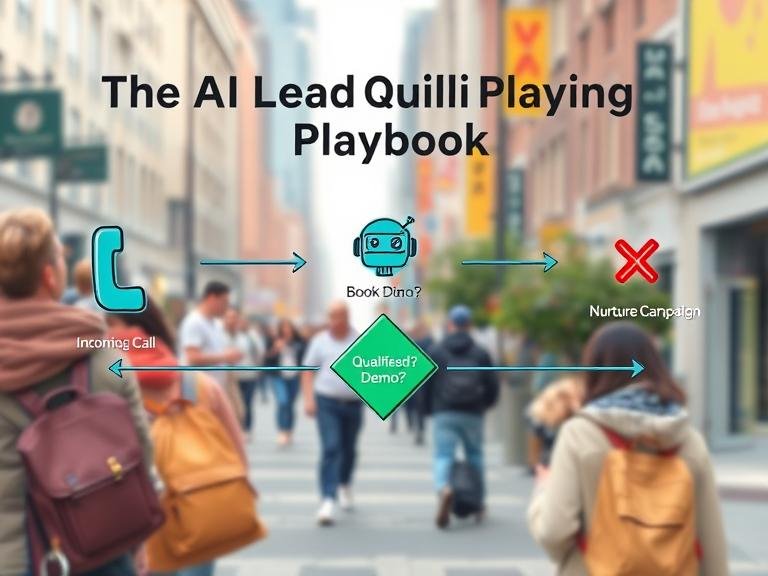
Human variability is both a strength and a weakness. A sales rep might forget to ask a key qualifying question, be having an off day, or misinterpret a prospect’s needs. This leads to inconsistent data and poorly qualified leads being passed on.
An AI call assistant removes this variability. It executes your qualification script perfectly, every single time. It asks the right questions, in the right order, and logs the answers with flawless accuracy. Think of it as your best sales development rep, cloned, who never has a bad day, never gets tired, and never forgets the process. As one sales manager put it, “The consistent, structured data we get from our AI assistant has been a game-changer. Our forecasting is more accurate, and I know exactly where to focus my coaching because the initial qualification is no longer a black box.”
Benefit 3: Free Your Sales Reps to Do What They Do Best: Sell
This brings us back to the 25% problem. By automating the repetitive, top-of-funnel screening process, the AI call assistant liberates your sales team from the tasks that drain their time and energy. Instead of spending hours dialing prospects who lack budget or authority, they can dedicate their expertise to high-value activities:
- Conducting compelling product demonstrations.
- Crafting strategic proposals.
- Negotiating contracts.
- Building relationships and closing deals.
By implementing AI, you can achieve the goal outlined by Bain & Company: effectively doubling the amount of time your team spends selling1. This shift doesn’t just increase sales team productivity; it boosts morale and transforms the very nature of the sales role from a high-volume grind to a strategic, high-impact profession.
The Playbook: How to Use AI for Lead Qualification (A Step-by-Step Guide)
Understanding the benefits is one thing; implementing the solution is another. This is where most guides fall short. Here is your practical, step-by-step playbook for setting up an AI-powered lead qualification process from scratch. For a strategic overview of how this transforms business-to-business interactions, the MIT Sloan Review on Gen AI in B2B Sales offers valuable insights.
Step 1: Define Your Ideal Lead (The Brains of the Operation)
An AI is only as smart as the instructions you give it. Before you can automate sales lead qualification, you must clearly define what a “good lead” looks for your business. This means translating your Ideal Customer Profile (ICP) into a concrete set of rules and questions.
The BANT framework is an excellent starting point:
- Budget: What is the minimum budget a prospect needs to be considered viable? AI Question: “To help me understand the scope, could you share the budget range you’ve allocated for this project?”
- Authority: Who is the decision-maker? AI Question: “Are you the one who would typically make the final decision on new software tools?”
- Need: What specific problem must they have? AI Question: “Could you tell me a bit more about the challenges you’re facing with your current lead management process?”
- Timeline: How soon do they need to purchase? AI Question: “What is your ideal timeline for implementing a solution?”
Create a simple lead scoring template. For example, a lead with the right budget gets 10 points, the right authority gets 10 points, and a timeline of under 3 months gets 15 points. A total score above 25 is automatically routed to a sales rep.
Step 2: Map the AI Conversation Flow
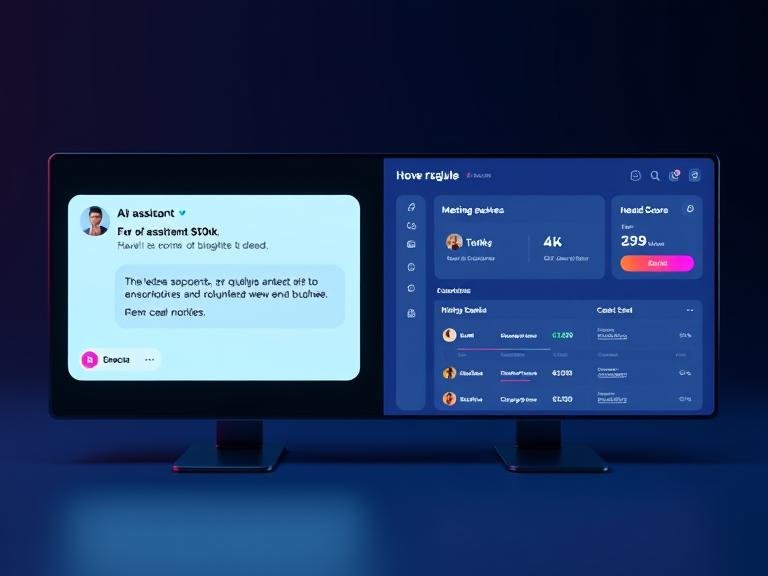
Next, visualize the path a call will take. This doesn’t have to be complicated. A simple flowchart can map out the entire automated lead qualification workflow.
- Incoming Call: The AI assistant answers instantly with a professional greeting.
- Intent Recognition: Using Natural Language Processing (NLP), the AI understands the reason for the call (e.g., “I’d like a demo,” “I have a question about pricing”).
- Qualification Questions: The AI proceeds with the BANT-style questions you defined in Step 1. Example Snippet: “Great, I can help with that. To make sure I connect you with the right expert, could you tell me a bit about your project timeline?”
- Routing Decision: Based on the lead’s score, the AI takes action:
- High Score (Qualified): “It sounds like our enterprise plan would be a great fit. I can book a 15-minute demo with a specialist for you right now. Are you free tomorrow at 10 AM?”
- Low Score (Unqualified): “Thank you for that information. Based on your needs, I’d recommend starting with the resources on our blog. I’ve just sent you an email with a link to our guide on getting started. Have a great day!” The lead is then added to a long-term nurturing email sequence.
Step 3: The Seamless Handoff (Connecting AI to Your Sales Team)
The most critical step is ensuring a seamless handoff from the AI to your human team. The goal is to eliminate manual work, not create new data silos. Best practices for creating a seamless handoff include:
- Direct CRM Integration: The AI must integrate directly with your CRM (like Salesforce or HubSpot). When a lead is qualified, the AI should automatically create a new contact, log the call transcript and qualification answers, and assign the lead to the appropriate rep.
- Instant Notifications: The assigned sales rep should receive an instant notification (via email, Slack, or a CRM task) that a new, hot lead has been assigned to them, complete with all the qualifying information.
- Automated Calendar Booking: The AI should have access to your sales team’s calendars to book meetings directly, eliminating the back-and-forth of scheduling.
Step 4: Avoiding Common Pitfalls
Implementing new technology comes with potential challenges. Here is some expert advice on how to avoid common mistakes:
- Mistake: Setting Overly Strict Criteria. If your qualification rules are too rigid, you might filter out promising leads who don’t fit a perfect mold. Start with broader criteria and tighten them over time based on performance data.
- Mistake: Forgetting the Human Element. Don’t “set it and forget it.” You must train your sales team to trust and effectively use the output of the automated system. Show them how the AI saves them time and provides them with better-qualified leads, making their job easier and more lucrative.
- Mistake: Poor Data Management. The AI is fed by data. Ensure your processes for monitoring and optimizing the system are clear. Regularly review call transcripts and qualification outcomes to refine your questions and scoring rules.
Choosing Your Tools: An AI Call Assistant Comparison for Small Business
The market for AI sales tools is growing, which can be overwhelming for an AI call assistant for small business. The right choice depends on your budget, technical resources, and specific needs. The future of the sales force will undoubtedly be shaped by these tools, as detailed in the Northwestern Kellogg: AI and the Sales Force analysis.
Here’s a comparison of the main types of tools:
| Tool Type | Best For | Cost | Complexity | Examples |
|---|---|---|---|---|
| Standalone AI Call Assistant | Teams wanting a dedicated, powerful phone automation solution. | Medium | Medium | Jason AI, Lindy.ai |
| AI Receptionist Service | Small businesses needing 24/7 call answering and basic qualification. | Low-Medium | Low | Emitrr, AnswerConnect |
| Integrated CRM AI Feature | Teams already invested in a major CRM platform. | High (part of a larger suite) | High | Salesforce Einstein, HubSpot AI |
Key Features to Look For in 2025
When evaluating options, especially for an AI phone answering service or assistant, prioritize these features:
- CRM Integration: This is non-negotiable. Without strong, native integration with your CRM, you’re just creating another data silo and more manual work.
- Natural Language Processing (NLP) Quality: How well does the AI understand human speech, including accents and slang? Ask for a live demo to test its capabilities.
- Customization: Can you easily edit the scripts, qualifying questions, and routing logic without needing a developer?
- Analytics & Reporting: The tool should provide clear dashboards on call volume, qualification rates, and other key metrics to help you optimize performance.
Expert Q&A
Question: “I’m a non-technical business owner. Isn’t this too complicated for me?”
Answer (from a fictional SMB automation consultant): “That’s a common concern, but the best modern tools are designed for business users, not engineers. Look for platforms with a visual, drag-and-drop interface for building conversation flows. A good provider will also offer a dedicated onboarding specialist to help you set up your first script and integrate it with your existing systems. The goal is to empower you, not overwhelm you.”
What About Security and Data Privacy?
Proactively addressing AI assistant security is crucial for building trust with both your customers and your team. You are entrusting a system with sensitive lead and business data. When evaluating vendors, ask these questions:
- Data Encryption: Is all data, both in transit and at rest, encrypted?
- Compliance: Does the vendor have recognized security certifications, like SOC 2?
- Data Handling Policies: Where is the data stored? Who has access to it? Do they have a clear, transparent privacy policy?
A reputable vendor will be happy to provide detailed answers to these questions. If they can’t, consider it a major red flag.
Proving the Value: How to Measure the ROI of Your AI Investment
One of the biggest gaps in most discussions about AI for sales is how to prove its worth. A successful implementation requires you to measure its impact and justify the investment. The potential is enormous; Bain & Company notes that AI can lead to “more than a 30% increase in win rates” on top of productivity gains1.
To build your business case, focus on tangible metrics. A simple ROI calculator can help you estimate potential savings and gains before you even start.
Key Metrics to Track (Beyond Call Volume)
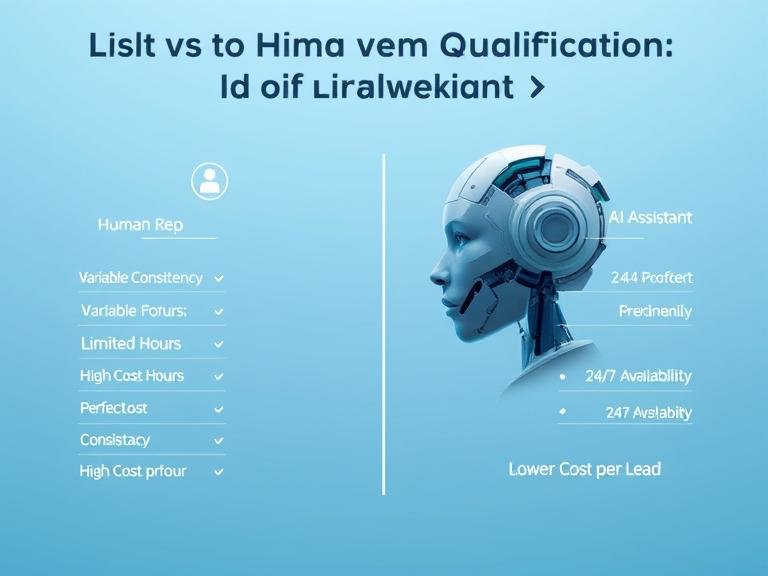
Don’t get distracted by vanity metrics like the number of calls handled. Focus on the key performance indicators (KPIs) that directly impact your bottom line:
- Cost Per Qualified Lead: How much does it cost you to generate one sales-ready lead? Automation should significantly lower this number.
- Lead-to-Demo Conversion Rate: What percentage of qualified leads booked by the AI actually result in a completed demo with a sales rep? This measures the quality of the AI’s qualification.
- Time Saved Per Rep: Calculate the hours previously spent on manual qualification that are now freed up for selling. Multiply this by your reps’ hourly cost to get a direct saving.
- Sales Cycle Length: By improving lead quality and speed-to-lead, AI can help shorten the time it takes to close a deal.
- Increase in Rep Productivity: Are your reps booking more meetings and closing more deals now that their time is freed up?
Track these KPIs on a simple dashboard to visualize the before-and-after impact of your AI call assistant.
Conclusion: Your High-Performance Sales Engine Awaits
The reality of modern sales is clear: the high cost of inefficiency is no longer sustainable. Your team is likely spending three-quarters of its time on non-selling activities, chasing leads that will never convert. This manual overload burns out your best people and leaves revenue on the table.
The AI call assistant offers a powerful, transformative solution. It is your tireless, 24/7 engine for capturing and qualifying leads with perfect consistency, freeing your human experts to focus on what they do best: building relationships and closing deals.
You now have the complete playbook. You know how to diagnose the problem, understand the solution, and follow a step-by-step guide to implementation—from defining your ideal lead to mapping the conversation and measuring the return on your investment. You have the framework to move your team from a state of manual overload to an AI-powered, high-performance engine.
Ready to stop wasting time and start qualifying leads 24/7? See how our AI Call Assistant can transform your sales funnel. Schedule your personalized demo today.
Sources & Further Reading
- Bosche, A., Wang, J., Bowen, P., Lewis, T., & Murphy, J. (N.D.). AI Is Transforming Productivity, but Sales Remains a New Frontier. Bain & Company. Retrieved from https://www.bain.com/insights/ai-transforming-productivity-sales-remains-new-frontier/
- Chui, M., Hazan, E., Singla, A., et al. (2023). The state of AI in 2023: Generative AI’s breakout year. McKinsey & Company. Retrieved from https://www.mckinsey.com/capabilities/quantumblack/our-insights/the-state-of-ai
Leave a Reply